
Manufacturer Directory: The Best Ways to Find and Vet Manufacturers in 2026

By Leon Z, Founder & CEO, Workus AI | Last updated: July 2026
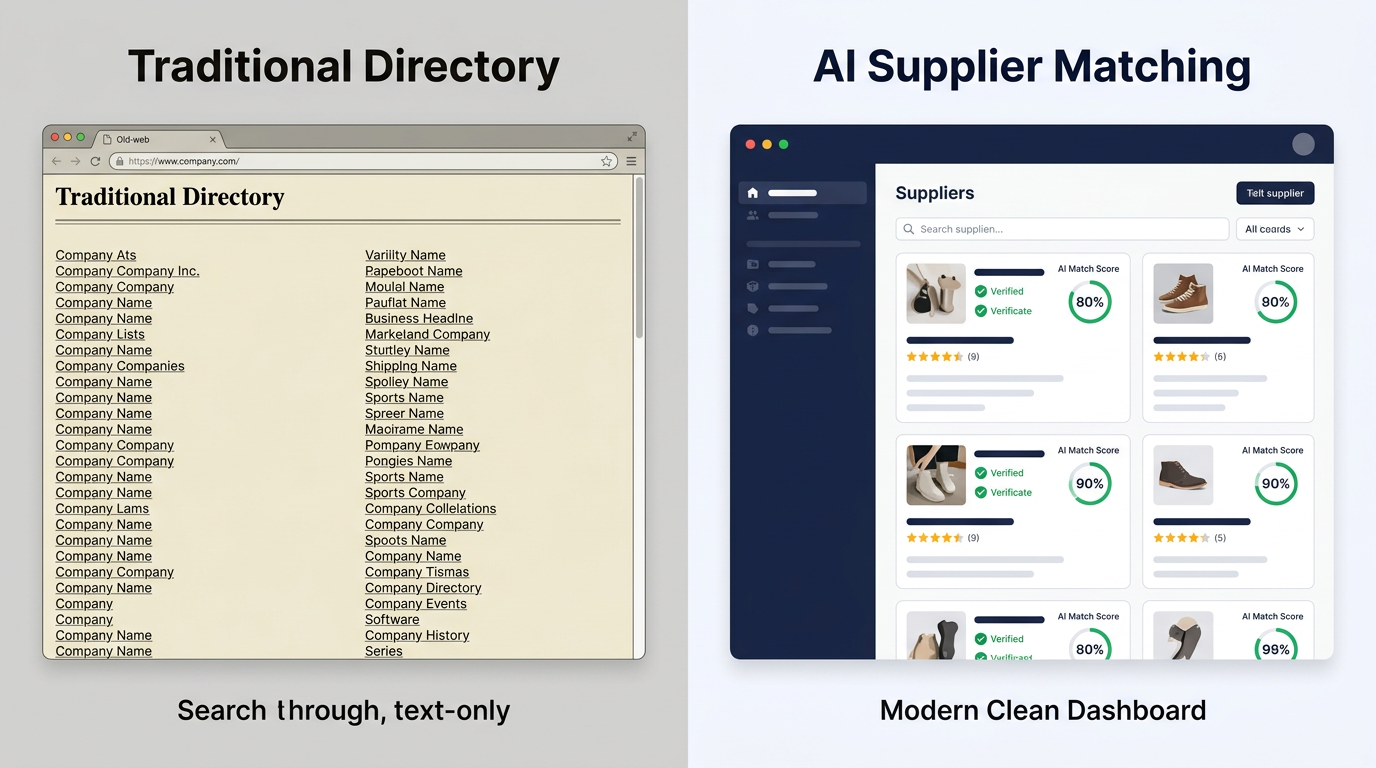
A manufacturer directory is a database of manufacturers organized by product category, geography, or industry. The original ones were print catalogs. The first generation of web directories were basically those catalogs in HTML - searchable, but not smart. In 2026, the landscape looks very different, and choosing the right directory (or the right tool entirely) has a real impact on how quickly you can find a qualified manufacturer and how much manual work you absorb.
This guide covers the major manufacturer directories, what each is actually good for, and how to use them without wasting weeks on unqualified leads.
---
What a Manufacturer Directory Actually Is
A manufacturer directory is a searchable index of manufacturers that lets buyers find suppliers by product category, location, certifications, or capabilities. The value is supposed to be discoverability - you search once, find multiple options, and start evaluating.
In practice, most directories have two problems:
- Listing quality varies wildly. Anyone can pay to be listed. "Verified" means different things on different platforms - sometimes it's a paid badge, sometimes it's actual audit data.
- They stop at discovery. The directory gives you a list. Everything else - outreach, RFQs, quote comparison, verification, order management - is still on you.
Understanding these limitations helps you use directories as one tool in a workflow rather than the whole workflow.
---
Major Manufacturer Directories in 2026
ThomasNet (thomasnet.com)
Best for: Industrial and manufacturing supply chain in North America
ThomasNet is the original industrial manufacturer directory. Founded in 1898, it has gone through multiple digital reinventions and now claims 500,000+ North American suppliers. The data quality on established industrial suppliers is genuinely good - companies have detailed profiles with certifications, capabilities, equipment lists, and quality management information.
Limitations: North America-heavy (not useful for Asia sourcing), no RFQ automation, and the UI feels dated. For buyers sourcing from North American manufacturers for technical/industrial components, it's still a solid starting point.
Alibaba (alibaba.com)
Best for: Consumer goods, commodities, and high-volume sourcing from China
Alibaba is not a traditional manufacturer directory - it's a marketplace. But with 200,000+ verified suppliers and tens of millions of product listings, it's where most buyers start for China sourcing. The scale is unmatched. The filtering is functional.
The problem is verification. "Gold Supplier" status is a paid tier, not an audit result. Trading companies list alongside factories with similar profiles. For buyers sourcing complex or high-value products, the noise-to-signal ratio is high.
For low-risk, commodity-type products where quality requirements are simple, Alibaba works fine. For anything requiring factory verification, it needs to be one input among several.
Global Sources (globalsources.com)
Best for: Electronics, consumer goods, hardware - curated Asia sourcing
Global Sources has historically served as the more curated alternative to Alibaba for professional buyers. It's connected to physical trade shows in Hong Kong and has stronger quality controls on who gets listed. The supplier pool is smaller but more vetted.
Better for professional buyers making significant orders. Less useful for small batches or highly specialized categories.
Made-in-China (made-in-china.com)
Best for: China manufacturing, strong verification layer
Made-in-China.com is Alibaba's main direct competitor for China-sourced goods. With 2.5M+ suppliers and a generally more rigorous verification process, it's worth including in any parallel search. The UI is less polished than Alibaba, but the underlying supplier data is comparable.
ImportYeti (importyeti.com)
Best for: Supplier research and competitive intelligence - not a directory per se
ImportYeti is not a manufacturer directory in the traditional sense. It surfaces US customs import records - so you can see which factories are actually supplying which US companies. If you want to know what factory your competitor uses, ImportYeti can tell you.
This is powerful for supplier research but doesn't replace outreach and vetting. It tells you a factory exists and has shipped; it doesn't tell you their current capacity, quality, or willingness to take new buyers.
ThomasNet vs Alibaba vs Global Sources - Quick Comparison
| Directory | Best For | Geography | Verification | RFQ Support |
|---|---|---|---|---|
| ThomasNet | Industrial, North America | US/Canada | Good | Basic |
| Alibaba | Consumer goods, commodities | Global (China-heavy) | Variable (paid tiers) | Manual |
| Global Sources | Electronics, hardware | Asia | Better than Alibaba | Manual |
| Made-in-China | China manufacturing | China | Moderate | Manual |
| ImportYeti | Research, competitor intel | US imports | N/A (customs data) | None |
| Workus AI | End-to-end sourcing | Global, 200+ countries | AI + trade data | Automated |
---
The Limits of Traditional Manufacturer Directories
Every directory on this list has the same fundamental constraint: they are indexes, not workflows.
You find a manufacturer. Then you still need to:
- Email 8-10 individual suppliers to get quotes
- Follow up manually when they don't respond
- Build a comparison spreadsheet
- Verify business registration and export history separately
- Check certifications (and whether they're actually valid)
- Manage sample requests
- Track order milestones
For buyers running one or two sourcing projects per year, absorbing this workflow manually is annoying but feasible. For procurement teams running 20+ projects, or founders trying to source while also running a business, the overhead is prohibitive.
This gap is exactly what AI-native sourcing platforms address.
---
Beyond Directories: How AI-Native Sourcing Works
Workus AI is not a directory. It's an end-to-end sourcing platform built on top of a 4M+ verified supplier database.
The difference in practice:
Step 1 - AI supplier matching: Describe what you need. Workus matches you with verified suppliers from 4M+ across 200+ countries and 7,000+ product categories - not a keyword search, but an AI that understands product specs, MOQ requirements, certifications, and supplier risk scores.
Step 2 - Automated RFQ: One click dispatches your RFQ to multiple suppliers simultaneously. No manual emails, no follow-up chasing.
Step 3 - Normalized quote comparison: Responses come back in a standardized format - unit price, MOQ, lead time, payment terms, certifications - in a side-by-side comparison dashboard. You're comparing apples to apples before negotiations begin.
Step 4 - AI risk checks: Every supplier goes through verification backed by trade data, compliance records, and on-site audit scores before you commit.
Step 5 - Managed execution: Workus's expert team handles inspection, freight, and logistics after you place the order.
The result is what buyers describe as going from "3 weeks of email chaos to 3 days of decisions."
Try Workus AI - AI supplier matching across 4M+ manufacturers →
---
How to Use Manufacturer Directories Effectively
If you are using traditional directories, here's the workflow that minimizes wasted time:
Start with category, not keyword. Most directories organize by product category, not search terms. Find your category first, then filter within it by geography, certifications, or order volume.
Contact 5-8 suppliers, not 1-2. The first supplier you find is not the best supplier. Cast a wide net before evaluating anyone seriously. This is also how you build price competition.
Verify before you engage deeply. Check business registration on the supplier's home country's company registry. Request certifications and verify them with the issuing body. Don't rely on self-reported information in the directory profile.
Use trade data to cross-check. ImportYeti shows US import records. If a supplier claims to export to North America but has no customs records, that's a signal worth noting.
Don't trust the directory's verification ratings alone. "Gold Supplier," "Verified Manufacturer," and similar badges are often paid tiers, not audit results. Use them as one data point, not the final word.
---
Choosing the Right Starting Point
You need North American industrial suppliers → ThomasNet
You're sourcing commodities or consumer goods from China → Alibaba (with additional verification)
You need curated China/Asia suppliers for hardware or electronics → Global Sources
You want to research what factories competitors use → ImportYeti
You want AI matching, automated RFQs, verified suppliers, and managed execution → Workus AI
---
About the author: Leon Z is the Founder & CEO of Workus AI, an agentic procurement platform serving 200+ buyers across 200+ sourcing countries.
Last updated: July 2026
FAQ
What is a manufacturer directory?
A manufacturer directory is a searchable database of manufacturers organized by product category, geography, or industry. It lets buyers find and contact suppliers without cold-searching the web. Examples include ThomasNet (North America industrial), Alibaba (global, China-heavy), Global Sources (Asia electronics and hardware), and Made-in-China.com.
Which manufacturer directory is best for industrial suppliers?
ThomasNet is the strongest manufacturer directory for North American industrial and manufacturing supply chain. It has 500,000+ verified US and Canadian suppliers with detailed profiles covering certifications, equipment lists, and capabilities. For Asian industrial suppliers, Global Sources and Made-in-China.com are better starting points.
How do I verify a manufacturer found in a directory?
Directory listings are a starting point, not a verification. To verify: check business registration in the manufacturer's country, request certifications and confirm them with the issuing body, search US customs data (via ImportYeti) to confirm export history, and request product samples before committing. Don't rely on paid 'verified' badges alone.
How many manufacturers should I contact from a directory?
Contact 5-8 manufacturers from your shortlist and send the same structured RFQ to each. At typical response rates, this gives you 3-5 real options to compare on price, MOQ, lead time, and quality. Narrowing too early — before you have competitive quotes — leaves money on the table.
What's the difference between a manufacturer directory and an AI sourcing platform?
A manufacturer directory gives you a list of suppliers. An AI sourcing platform like Workus AI goes further: it matches you with verified suppliers based on your requirements, automates RFQ dispatch, normalizes quote comparison, runs risk checks on suppliers, and manages inspection and logistics after you place an order. Directories are discovery tools; AI platforms are end-to-end sourcing workflows.
Popular

Best Procurement Software for Small and Mid-Size Businesses in 2026
Compare the best procurement software for small and mid-size businesses in 2026. AI sourcing, RFQ automation, and spend management tools reviewed.

How to Find Manufacturers: The Complete Guide to Sourcing Physical Products
Learn how to find manufacturers for your physical product in 7 steps. Covers where to search, how to send RFQs, evaluate suppliers, and avoid common mistakes.

How to Source Products from China: A Step-by-Step Guide for 2026
Complete guide to sourcing products from China in 2026: finding suppliers, sending RFQs, supplier verification, sample orders, and shipping.