
Supplier Onboarding Process: How to Qualify and Activate New Suppliers

By Leon Z, Founder & CEO, Workus AI
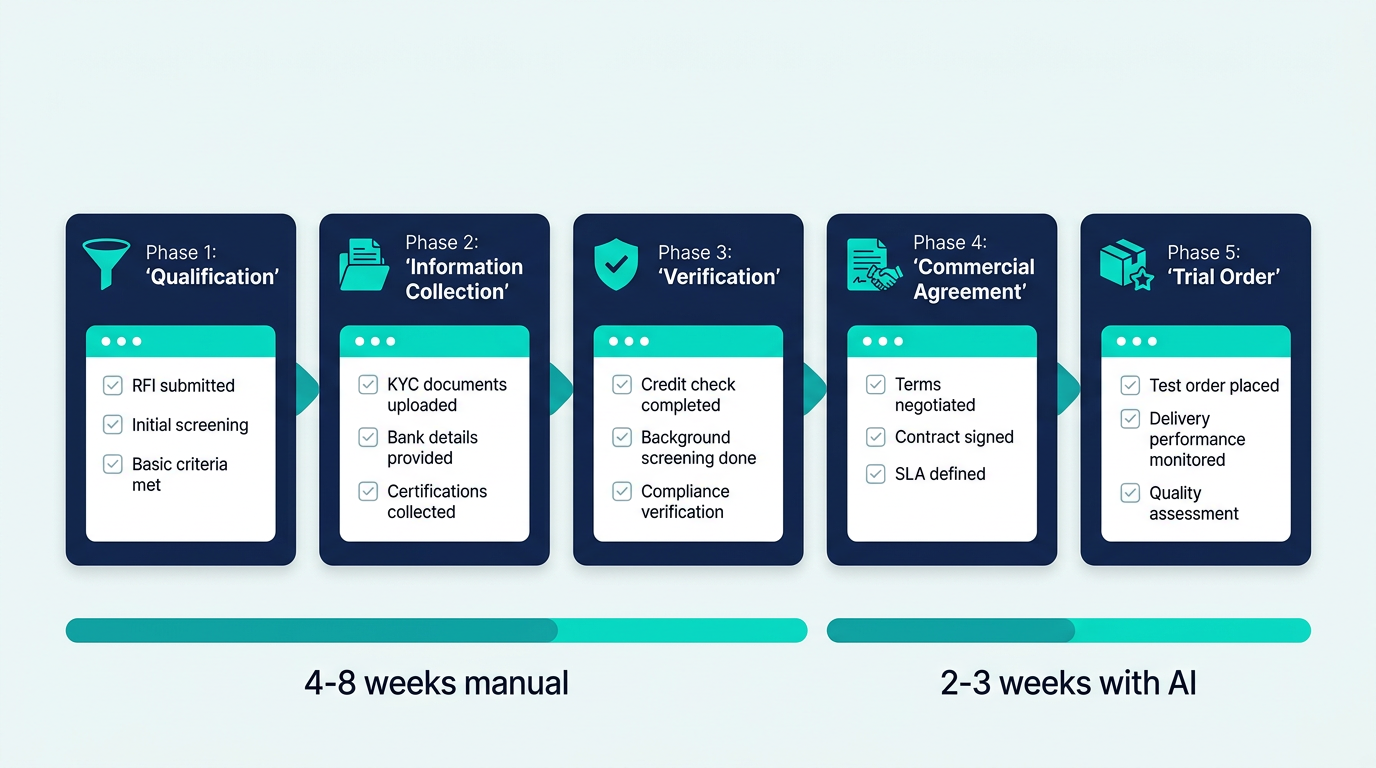
Supplier onboarding is the process of qualifying, approving, and integrating a new supplier into your procurement operations. Done well, it creates a clean record of who you're buying from, under what terms, and with what level of verified trust. Done poorly, it's how quality problems, compliance gaps, and payment disputes happen.
Founder perspective: "The teams that have the smoothest supplier relationships aren't the ones with the best personal connections — they're the ones with the most disciplined onboarding process. When something goes wrong with an order, the root cause almost always traces back to something that wasn't checked during onboarding: a certification that expired, a factory capacity that was overstated, a payment term that was never written down." — Leon Z, Founder
Why Supplier Onboarding Matters
Every supplier you add to your vendor base is a risk exposure. Before the first real order, a good onboarding process answers:
- Is this a real, legally registered business?
- Can they actually make what they're quoting?
- Do they hold the certifications your products require?
- What are the agreed payment terms, lead times, and quality standards?
- Who is the account owner and escalation contact?
Without answers to these questions on file, you're operating on trust. That works fine until it doesn't.
The Supplier Onboarding Checklist
Phase 1: Qualification (Before First Contact)
- [ ] Define minimum requirements for the category (certifications, country restrictions, MOQ limits)
- [ ] Identify suppliers via sourcing platforms, trade data, or recommendations
- [ ] Run initial screen: legal registration, basic web presence, export history signals
Phase 2: Information Collection
- [ ] Request completed supplier profile form (business name, registration number, address, key contacts)
- [ ] Collect certifications (ISO, CE, FDA, etc.) — originals or verifiable copies
- [ ] Request bank account details and payment terms
- [ ] Collect insurance documentation (for higher-value categories)
- [ ] Sign NDA if applicable
Phase 3: Verification
- [ ] Cross-reference business registration against official registry
- [ ] Verify certifications against issuing body records
- [ ] Check trade data: have they actually exported this product category to your target market?
- [ ] Reference check: speak with 1–2 existing buyers if possible
- [ ] For orders over $50,000: factory audit or independent assessment
Phase 4: Commercial Agreement
- [ ] Issue and execute supplier agreement covering: pricing terms, lead times, payment schedule, quality specs, inspection rights, liability
- [ ] Set up in ERP/procurement system with approved status and spend limits
- [ ] Assign internal owner
Phase 5: Trial Order
- [ ] Place first order at lower volume than planned to test quality, communication, and lead time adherence
- [ ] Arrange pre-shipment inspection
- [ ] Document outcome — update supplier scorecard based on performance
---
How Long Should Supplier Onboarding Take?
For most SMB sourcing teams, the honest answer is: longer than it should.
| Phase | Manual Timeline | With AI Assistance |
|---|---|---|
| Qualification + initial screen | 3–5 days | Same day |
| Document collection + verification | 3–5 days | Hours |
| Legal review | 1–2 weeks | 1–2 weeks |
| Trial order | 2–4 weeks | 2–4 weeks |
| Total | 4–8 weeks | 2–3 weeks |
Based on patterns observed across Workus AI buyers. Individual timelines vary by category and order complexity.
---
Supplier Onboarding for eCommerce and DTC Brands
For ecommerce operators and DTC brands, supplier onboarding is often informal by default: find someone on Alibaba, exchange a few emails, send a PayPal payment. This works at very small scale.
As you grow, the risk profile changes. A single quality failure on a product launch can generate returns, negative reviews, and social media damage that costs more than the product itself. Formalizing onboarding — even with a lightweight version of the checklist above — materially reduces that risk. According to Deloitte's Global CPO Survey, supplier risk management is consistently ranked as a top procurement priority by CPOs across company sizes.
---
How Workus AI Handles Supplier Onboarding
Workus AI runs the qualification and verification phases automatically:
- AI supplier matching against 4M+ verified suppliers, filtered by category and certification
- Automated risk checks: business identity, export history, capability signals
- Certificate collection: automated document requests and verification
- Managed first order: inspection, freight, and delivery handled by the expert team
For teams doing more than a handful of supplier activations per year, this compresses Phase 1–3 from weeks to hours.
"Workus helped us source certified LED suppliers in 14 days and compare 38 quotes across China and Vietnam." — Sarah Chen, VP of Sales
Start qualifying suppliers on Workus AI →
---
About the author: Leon Z is the Founder & CEO of Workus AI, an agentic procurement platform serving 200+ buyers across 200+ sourcing countries.
Last updated: June 2026
Popular

Manufacturer Directory: The Best Ways to Find and Vet Manufacturers in 2026
Compare the top manufacturer directories in 2026 - ThomasNet, Alibaba, Global Sources, and AI-native platforms. Find the right one for your product and sourcing region.

Best Procurement Software for Small and Mid-Size Businesses in 2026
Compare the best procurement software for small and mid-size businesses in 2026. AI sourcing, RFQ automation, and spend management tools reviewed.

How to Find Manufacturers: The Complete Guide to Sourcing Physical Products
Learn how to find manufacturers for your physical product in 7 steps. Covers where to search, how to send RFQs, evaluate suppliers, and avoid common mistakes.